Managing the rising costs of fuel and fertiliser in your agricultural business
Is your farming or agricultural business experiencing rising fuel and fertiliser costs? We share 5 ways to manage your machinery, soil and field management to reduce the financial impact.
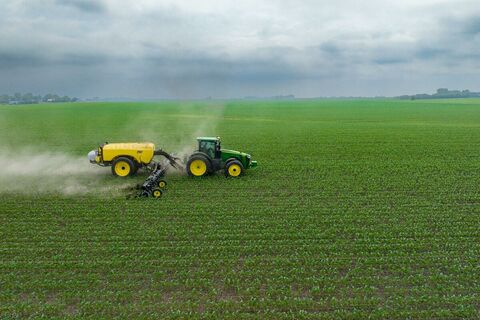
The ongoing tensions in the Middle East are having a significant impact on farming businesses and the wider agricultural industry.
Both fuel costs and fertiliser costs have risen dramatically since the Strait of Hormuz was closed to the usual shipping traffic. This is placing small agricultural businesses under enormous financial strain, as these high costs eat into margins and threaten cashflow.
Let’s look at five key ways your farm or agricultural business could limit the impact
1. Test your soil and use fertiliser with more precision
Test your soil and group your farm’s fields into management zones using these test results. Pull back your use of synthetic fertiliser in high-fertility zones and prioritise fertiliser in the least fertile areas, allowing you to make the best use of your available resources.
2. Adopt Variable Rate Technology (VRT)
Use the principles of Variable Rate Technology, GPS-guided equipment and prescription maps to apply nutrients at varying rates across your fields. This helps you target inputs only where needed, reducing the total volume of fertiliser used and cutting down on any waste.
3. Move to conservation tillage techniques
Switch to conservation tillage methods, such as strip-till or no-till farming systems. This reduces field passes and cuts down on your use of heavy machinery, directly lowering your diesel consumption and tractor maintenance costs while also improving soil structure.
4. Up the nitrogen in your soil with nitrogen-fixing crops
Incorporating nitrogen-fixing crops (like clover, vetch and field peas) into crop rotations helps to boost the nitrogen in your soil without expensive fertilisers. These plants naturally build soil nitrogen reserves, significantly reducing reliance on expensive synthetic urea and nitrates.
5. Optimise the efficiency of your machinery and vehicles
Optimise your field routes and use the most cost-effective machinery to ensure you’re using as little fuel as possible. Avoiding overlapping passes can help to maximise your fuel economy across all your field-based operations.
Working with you to manage your agricultural costs
Keeping your farm or agricultural business in a positive cashflow position is an ongoing challenge in the current market.
Book some time with our team to review your current fuel and fertiliser expenses. We’ll help you come up with cost-saving strategies to preserve your all-important cashflow.
Get in touchRelated Articles

Employing the talent you need to drive your strategy
Need to grow your team in 2026? Discover practical ways to attract and retain the talent your business needs.
Read On
Basics strategic advice: how do accountants support your financial performance?
Discover how accountants can improve cashflow, boost revenue, and increase profitability to support business growth.
Read On
Making Tax Digital for Income Tax - Understanding Quarterly Updates
MTD for Income Tax becomes mandatory from 6 April 2026. Find out if you're affected and how to prepare for the changes.
Read On